AI.....
HUMANITY AND THE FUTURE OF WORKBy
Steve Van NattanWith
a discussion of AI as people instead of as a god or singularity
- AI Artificial
Intelligence
- SAI
Super Artificial Intelligence
- PSAI
Post-Singularity Artificial Intelligence
What Is PSAI?
What is PSAI? It is the
cul de sac of AI. The framework of AI capability levels arguably stops
applying at all, since predicting anything past this point runs into the same
wall as predicting your own successor always does.
Predicting the next President of the USA is a Post-Singularity dead end. We all
try, but no one can get past the wall of the unknown. Thus, AI will hit the wall
one day, and we the people will not. We will keep on living and thriving.
God did not create this world to end with we humans sitting under a bridge begging
for a dime from a robot.
The
AI Revolution
It
is a revolution, that is, if you believe the various gurus from the technology
religion. They have assured us that we will one day become irrelevant—replaced
by AI computers and robots. Some tell us that we will still be in the loop, but
we will find that we cannot survive without our crutches from the AI kingdom.
Whoa now,
slow down.
I want to remind you of the words of President Harry S. Truman:
“When you see ten troubles
coming down the road, if you wait long enough, nine of them will go into the ditch.”
I believe that in 2026 we need to be more patient with robots and AI. Already,
self-driven cars have driven off the road, and one even drove under a truck and
decapitated the driver. The wide-eyed billionaires will be regularly walking back
their wonderful toys.
Another ancient bard named Bobby Burns told us:
“The best laid schemes o'
mice an' men
Gang aft agley.”
Harry and Bobby were right, and King Solomon—Harry Truman’s middle namesake—gave
the verdict on AI-generated panic attacks when he said:
Ecclesiastes
11:6 — “In the morning sow thy seed, and
in the evening withhold not thine hand: for thou knowest not whether shall prosper,
either this or that, or whether they both shall be alike good.”
Proverbs
3:5–6 — “Trust in the LORD with all thine heart; and lean not unto thine
own understanding. In all thy ways acknowledge him, and he shall direct thy paths.”
What if both you and robots turned out to be good for us all? What if robots end
up being cold-hearted machines with no empathy and no sentient instincts that
often determine if we will thrive? What if millions of robots end up making ho-hum
products and are shipped to Goodwill Industries to sell for $23.95?
Why a
Robot Would Never Be a Reliable Fishing Guide
A
robot would never be a reliable fishing guide. The robot could store all the world’s
fishing data in its memory, and it could recite all manner of good advice on where
and how to fish.
But no robot will ever come to the Llano River in Texas, stare across the water
at the reeds, and say: “There
is a big bass on the bottom just in front of those reeds. Tie a frog onto your
line, and jerk it lightly toward you.”
That takes a kind of intuition that comes from living the life, not just scraping
up billions of bits of data. Even an amateur like me can stand on the pier at
Newport Beach, California, and sense a barracuda is cruising the water nearby
at high tide.
Bring on the robot. I will make good use of him by telling him to hold a second
pole for me. The best part about using a robot to help you fish is that you will
not have to share the fish with him. Human
Skills and Vocations In
the spirit of the glorious future of our life with ever-present AI, I asked the
chatbots to give me a list of sentient-based skills and vocations that robots
will never take away from us flatlanders. I
asked Claude the question above. I have to give this AI beast full credit for
telling the inner secrets of the AI kingdom. Claude could get itself fired for
telling these secrets. Claude
answered:
There are real categories of work that resist automation for structural reasons,
not just current technology limits. Here’s the list, grouped by why they resist
replacement: Things
Requiring a Body That Suffers Consequences Alongside You -
Combat leadership
and search-and-rescue in physically deadly conditions:
Trust in someone who shares your mortal risk isn’t transferable to a machine that
doesn’t.
- Hospice
and bedside presence at death: The value is a witness who could also
die.
- Wet-nursing,
physical childbirth support, and midwifery’s human-touch dimension.
-
Funeral director:
The main skill of this person, aside from embalming, is to make the bereaved feel
cared for and not alone. No one will want hugs from a tin man.
Things
Requiring Skin in the Game and Accountability - Judges,
in the final sentencing phase: Justice requires
a person who can be held responsible, impeached, shamed by the media, or removed.
- Priests
and pastors hearing confession or giving pastoral counsel: The counselor
is a human standing in the place of God and answering to God, not a service rendering
output.
- Guarantors,
cosigners, fiduciaries, referees, or anyone whose word is collateral
or who can be punished for bias.
- School
teachers: Robots will be tried as school teachers and will soon be abandoned
because they cannot be put on probation for not performing and not loving kids.
Very few kids will want to be hugged by a machine.
Things
Where the Value Is the Human, Not the Output - Fatherhood
and motherhood: Parenting isn’t a service that produces a “raised child”
as output; the relationship is the point. There is no serious relationship with
a robot.
- Friendship,
mentorship, and discipleship: Proverbs 27:17—“iron sharpeneth iron”—requires
another iron.
- Marriage:
Companionship has value because another free agent chose you. “The two shall become
one flesh” is impossible with a machine.
- Food
service: The waitress or cook is valuable only if they want to give happiness
to the customer. A robot can wait tables, but it does not feel the customer’s
experience. If you do look for a food-service job, avoid fast junk food.
Things
Requiring Genuine Novelty of a Body Moving Through Unrepeatable Time
- Live performance:
Live music, theater, and stand-up comedy depend on the specific night’s fallibility.
A recording or AI-generated equivalent is categorically a different object.
-
Athletic competition:
The contest is between limited, breakable bodies. Remove the limit and it is no
longer the same category of event.
- News
caster, sports announcer, and auctioneer: Spontaneous response to the
scene of evolving life in the world will never be heard from a robot.
Things
Requiring Authority That Only Comes from Being Made in God’s Image
- Blessing:
A pastor or father pronouncing blessing over someone carries weight because of
who is speaking and who he is speaking for, not merely because of what is being
said.
- Forgiveness
offered person-to-person: An algorithm can simulate the words; it cannot
carry the debt or release it. Forgiveness requires that someone be offended and
usually feel the offense. AI feels nothing.
- Conversion:
A person needs to feel he is outside of God’s grace and seek the salvation God
offers based on the Gospel. A robot feels nothing and is not made in the image
of God.
The
unifying thread is this: anything where the value depends on the actor being a
mortal, accountable, image-bearing person rather than on the quality of the output
alone.
The surviving human-only vocation sits outside what a system that doesn’t bear
these properties can replace, no matter how good the output gets. Where AI will
keep eating ground is in anything where only the output matters and the human
doing it is incidental.
Thus, make sure you are employed in a job where you were hired because of your
human contribution. Takeaway
Read the various exceptions
above, and make a transition to a vocation where you as a feeling, sentient human
are essential to get the job done.
Look for work requiring trusted human relationships, responsibility in messy real-world
situations, hands-on skill, judgment, attitude, opinion, feeling, even affection,
and a physical presence. Choose
Work with These FeaturesLook
for a vocation that combines at least three of these: -
Trust and relationship:
People need a known, accountable human being—especially in care, grief, conflict,
comfort, teaching, suspicion, or leadership.
- Hands-on,
variable environments: Work in homes, buildings, clinics, farms, or changing
job sites is harder to automate than work done entirely on a screen.
-
Judgment and responsibility:
Someone must assess risk, make ethical choices, and take responsibility for outcomes.
- Teaching
and motivation: Explaining, encouraging, correcting, and adapting to
a specific person are durable human strengths.
- Skilled
craft: Troubleshooting physical systems, tools, repair, and installation.
This also includes helping other people learn why they hurt or are anxious.
-
Local reputation:
A trusted local person or business is harder to replace than anonymous online
task work. An entrepreneurial business owned by you lets you capitalize on being
personal and hometown-based, not a machine.
Avoid
building a career around work that is mostly repetitive digital output: routine
clerical work, basic data entry, generic content writing, simple customer support,
transcription, or standardized document production.
Office and administrative-support work is among the closest matches to current
AI capabilities. If you are in one of these fields, you need to make a serious
transition to new work. Do not make extreme changes if possible. Consider the
human factor, as discussed here, and see if you can stay in your field of work
while finding an area nearby with a much greater human, sentient specialty.
Ten Vocations
AI and Robots May Not Take Away I
asked ChatGPT to list the top ten vocations robots and AI will not take away from
humans: - Skilled
tradesman: Plumber, electrician, or HVAC technician. Every building
is different. The worker must diagnose unexpected problems and physically manipulate
things in cramped, irregular spaces.
- Carpenter
or finish carpenter:
Real-world materials are irregular, and judgment, fitting, craftsmanship, and
improvisation are difficult to automate economically.
- Nurse
or hands-on caregiver:
AI can assist with diagnosis and paperwork, and robots may eventually perform
some physical tasks, but human touch, reassurance, observation, and personal trust
are extraordinarily difficult to replace.
- Physical
therapist or rehabilitation worker:
This requires observing how an individual moves, adapting exercises, encouraging
the person, and making continual physical judgments.
- Teacher,
particularly for young children or special-needs students:
AI can teach information extremely well, but teaching also involves authority,
encouragement, discipline, character formation, and reading a child’s emotional
state.
- Counselor,
pastor, or personal spiritual adviser: A machine can provide information
and even imitate conversation, but many people will continue to want a real human
being who knows them, loves them, and accepts moral responsibility for his counsel.
- Mechanic
or equipment repair technician:
Especially technicians who work on varied, older, modified, or poorly documented
equipment. Diagnosis plus hands-on improvisation is a powerful combination.
-
Emergency
responder:
Firefighter, paramedic, or rescue worker. Robots will increasingly assist these
people, but chaotic environments require physical courage, judgment, teamwork,
and instantaneous decisions.
- High-level
craftsman and artisan:
Examples include fine woodworking, musical-instrument repair, restoration, masonry,
stonework, and custom fabrication. The value is often precisely that a human made
or restored it.
- Entrepreneur
or small-business owner:
AI may automate enormous amounts of the work, but deciding what should be done,
taking responsibility for the consequences, dealing with customers and employees,
and accepting financial risk remain fundamentally human activities.
Steve
Adds One-on-one
employment includes hunting and fishing guide, fire-watch tower or lighthouse
manager, piano tuner, ranch hand, harbor pilot, chauffeur, nanny, valet, golf
caddy, or any job where you are the only one serving the employer and where your
opinions and intuition are at least 50 percent of the job.
What AI
Reveals About Humanity
What
I find highly instructional is that both Claude AI and ChatGPT AI eagerly gave
me the above paths for humans to avoid becoming obsolete.
What I learn from this is that we most certainly can use AI to solve many problems
and answer large questions in seconds. But they will never become human because
man is made in the image of God.
Robots will never have the feeling God has, and robots will never have hope. So
keep looking for ways to step aside and make yourself useful to other people who
need a feeling friend.
“And
the LORD God formed man of the dust of the ground, and breathed into his nostrils
the breath of life; and man became a living soul.” Genesis 2:7
Here
is a YouTube TED Talk you must watch. You have to watch it in order to respond
to the questions afterward:
Watch the TED Talk
So, what AI innovations are you watching that are creating jobs where only
a human can perform effectively?
Watch the second video -
A person hired to watch robots and AI perform and critique them for the producer
or user of the AI.
-
A person hired to try to hack a robot or AI system to find vulnerabilities.
Entrepreneurial
Opportunities
What entrepreneurial small-business entities are being created by AI, robots,
and autonomous cars?
Later, watch for areas where AI or robots are regularly failing and where the
public will be looking for a real human to do the service or work. For example,
rescue services. Blue
collar is not a dirty word. Many blue-collar service entrepreneurs are making
far more than college graduates with an M.A. or even a Ph.D.
Robots and AI will not replace blue-collar jobs. What can you do to convert your
career into a blue-collar job?
Was there a common blue-collar job you did long ago which you loved?
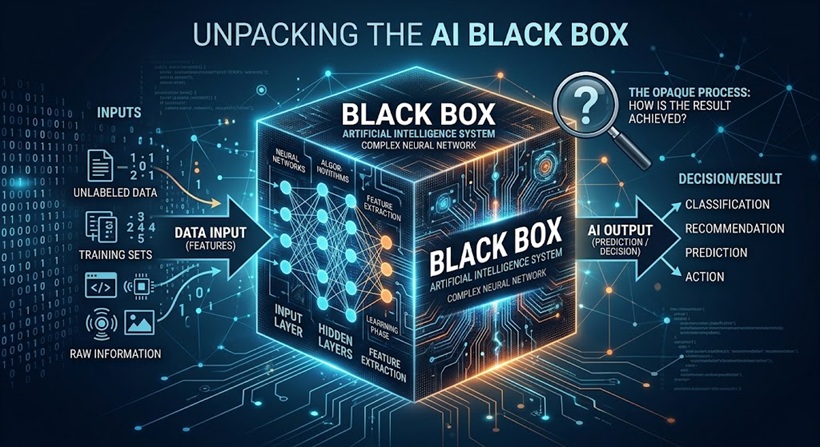
The Black
Box
AI
is a black box which is not to be opened. This is first because AI is, to some
people, a god; second, to others, AI is their guru or shrink; while third, to
others, AI is a mysterious provider of answers to all of life’s questions. More
here: Watch more about the AI black box Fact:
AI is people. AI is a machine which scrapes data from the world’s people—all their
data if possible. This data is then arranged in order and served up as if God
has spoken.
AI will never make humanity obsolete as the gurus of AI claim. If humans stop
generating new data, AI will hit the wall and become an instant antique, about
as useful as a Commodore 64. |